
As Agbara Nla becomes that fruitful tree shading sun from farm-returned villagers at hot noon day, tales of its emergence into the creative economy since the 90s runs into public conversations. Long before Agbara Nla – The Return returned to Nigerian cinemas in 2026, before Mount Zion became a recognised name in Christian film production, and before Christian films found a significant place within Nigeria’s cinematic landscape, there were pioneers whose technical expertise, mentorship and willingness to serve helped lay the foundation.
Evangelist Mike Bamiloye, the Executive Director of Mount Zion Institute of Christian Drama (MZI), explained on his social media platform how the assistance of a selfless individual gave reality to the Agbara Nla dream.
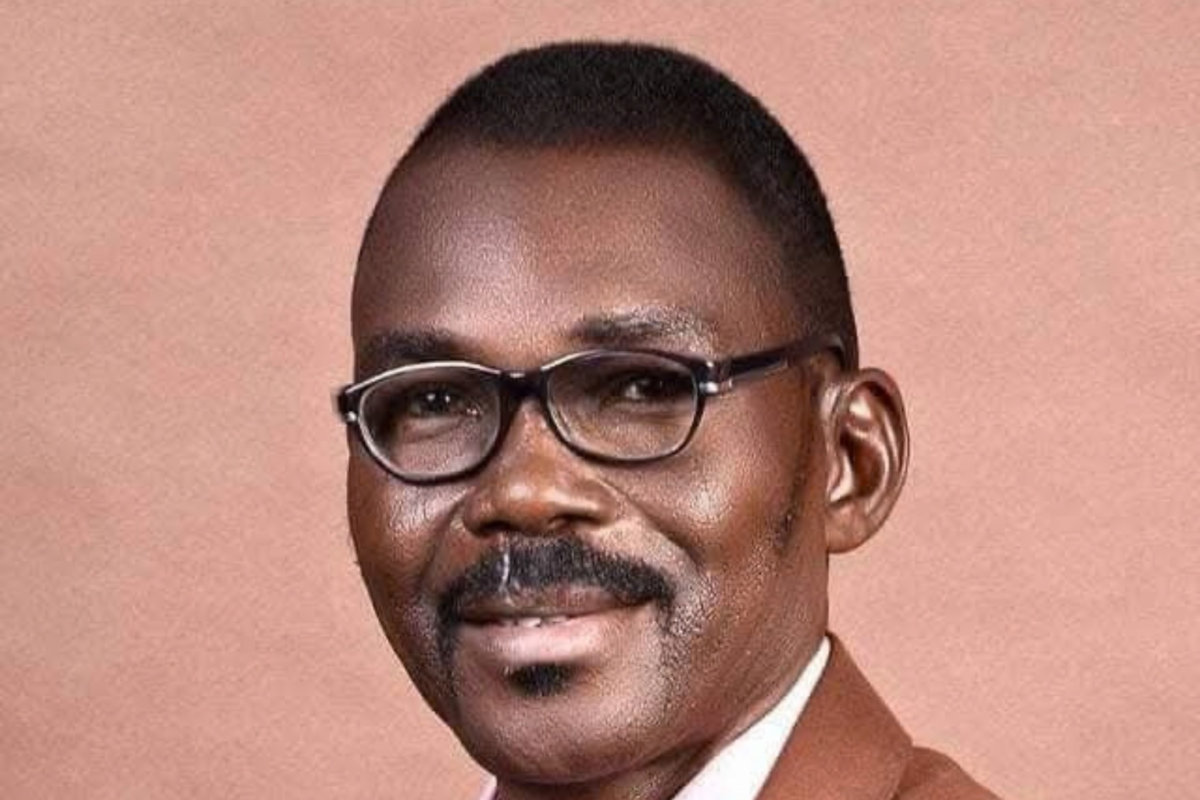
One of those pioneers was Bro. Kayode Oyebode, popularly known as Kay Technical. The story of Mount Zion’s journey into film production cannot be told in full without acknowledging the significant role played by Kayode Oyebode. In 1989, he became the man the Lord used to introduce Mount Zion to the world of film production, providing not only technical expertise but also the direction and mentorship that the ministry needed at a critical stage of its development.
Prior to 1989, Mount Zion had made attempts on two major occasions to venture into movie production. Those attempts, however, did not yield the desired results. The challenge was not a lack of passion or commitment, but the absence of adequate technical direction and experienced mentorship.
That changed during a drama outreach in Ikole Ekiti, where members of Mount Zion encountered Kayode Oyebode. Oyebode offered to help and guide the emerging ministry in its attempt to translate its dramatic productions from the stage to the screen. He subsequently served as the Cameraman and Technical Director for Mount Zion’s first film project, The Unprofitable Servant, produced in 1989.
At the time, Mount Zion was still learning the technical demands of filmmaking. Oyebode therefore did more than operate the camera. He provided the technical leadership for the production, while the Mount Zion team followed his direction and learnt through the process.
What had previously appeared to be an uncertain venture began to take shape under the guidance of someone who understood the technical requirements of film production.
The production of The Unprofitable Servant marked a significant transition for Mount Zion. The ministry was no longer confined to live dramatic presentations; it was beginning to explore the possibilities of using film as a medium for communicating the Christian message beyond the immediate reach of a theatre audience.
The significance of the project became even clearer when the film was broadcast on NTA Tejuoso, Ikeja, during Easter in 1990.
For Mount Zion, the broadcast was more than an appearance on television. It was an affirmation that the ministry could successfully translate its theatrical work into film and reach a much wider audience.
The experience provided the encouragement needed to proceed immediately with another production.
From Television to the Cinema
In 1990, Mount Zion embarked on its second film project, Beginning of the End. Once again, Kayode Oyebode played a central technical role, handling the camera and directing the production. The story did not end with the English-language production.
A Yoruba version, Ibẹrẹ Opin Ayé, was subsequently produced, and Oyebode was instrumental in helping the production make the transition from television and video production into the cinema.
During the Christmas season of 1990, the Yoruba version was screened at D’Rovans Hotel, Ring Road, Ibadan, and K.S. Motel, Total Garden. The significance of this achievement cannot be understated. At a time when Yoruba-language cinema productions were gaining popularity and attracting audiences, Ibẹrẹ Opin Ayé became, according to the historical account of Mount Zion’s pioneers, the first Nigerian Christian film to enter the cinema.
His contribution was not merely that of a cameraman. At a formative period when Mount Zion was still discovering the technical language of cinema, Kayode Oyebode provided practical knowledge, direction and mentorship. His involvement helped bridge the gap between theatre and film. For a ministry whose foundation was deeply rooted in Christian drama, this bridge was particularly important. The transition from live performance to the screen required new ways of thinking about camera placement, visual storytelling, performance for the lens, production processes and technical execution.
The importance of these early steps becomes even more apparent when viewed against the background of Mount Zion’s subsequent development in Christian film production. The journey that began with The Unprofitable Servant in 1989 continued through productions such as Beginning of the End and Ibẹrẹ Opin Ayé, eventually contributing to a broader tradition of Christian filmmaking associated with Mount Zion.
That tradition would later produce films that reached audiences across Nigeria and beyond. It is within this historical continuum that Agbara Nla occupies a significant place. The original Agbara Nla, produced in 1993, emerged during a period when Mount Zion’s film ministry was developing its identity and expanding its capacity for Christian storytelling through film. More than three decades later, Agbara Nla – The Return revisits that legacy for a new generation.
The return of Agbara Nla to the cinema in 2026 is also a reminder of a journey that began years earlier with pioneers who were willing to provide the knowledge, skills and technical direction required to move Mount Zion into a new creative territory.
Putting it all in one pot, this narrative teaches the reader that the emergence of any great thing is the consequence of incredible team work.